For a long time, the visible artifacts of my creative life were easy to categorize—vibrant, celebratory, eclectic. People saw the colours, the novel forms, the doctor who painted. And while every earlier exploration taught me something essential about materiality and human joy, I always knew that what the world saw on the surface was not the real engine of my soul’s purpose in art, I just needed to take the time to find my artistic voice.
I do not make art to decorate a room. I make art to test—and shift—how we see. How we feel, what we listen to, what we eat. Experience.
In medicine, you are trained to look past immediate surface impressions to read the deeper architecture underneath: bone, history, memory stored in living tissue, and the quiet forces that sustain life long before anything becomes visible to the eye. Over time, I began asking the same question about human perception. What foundational truths have been edited out of our collective imagination—and how does recovering them change the way we inhabit the present?
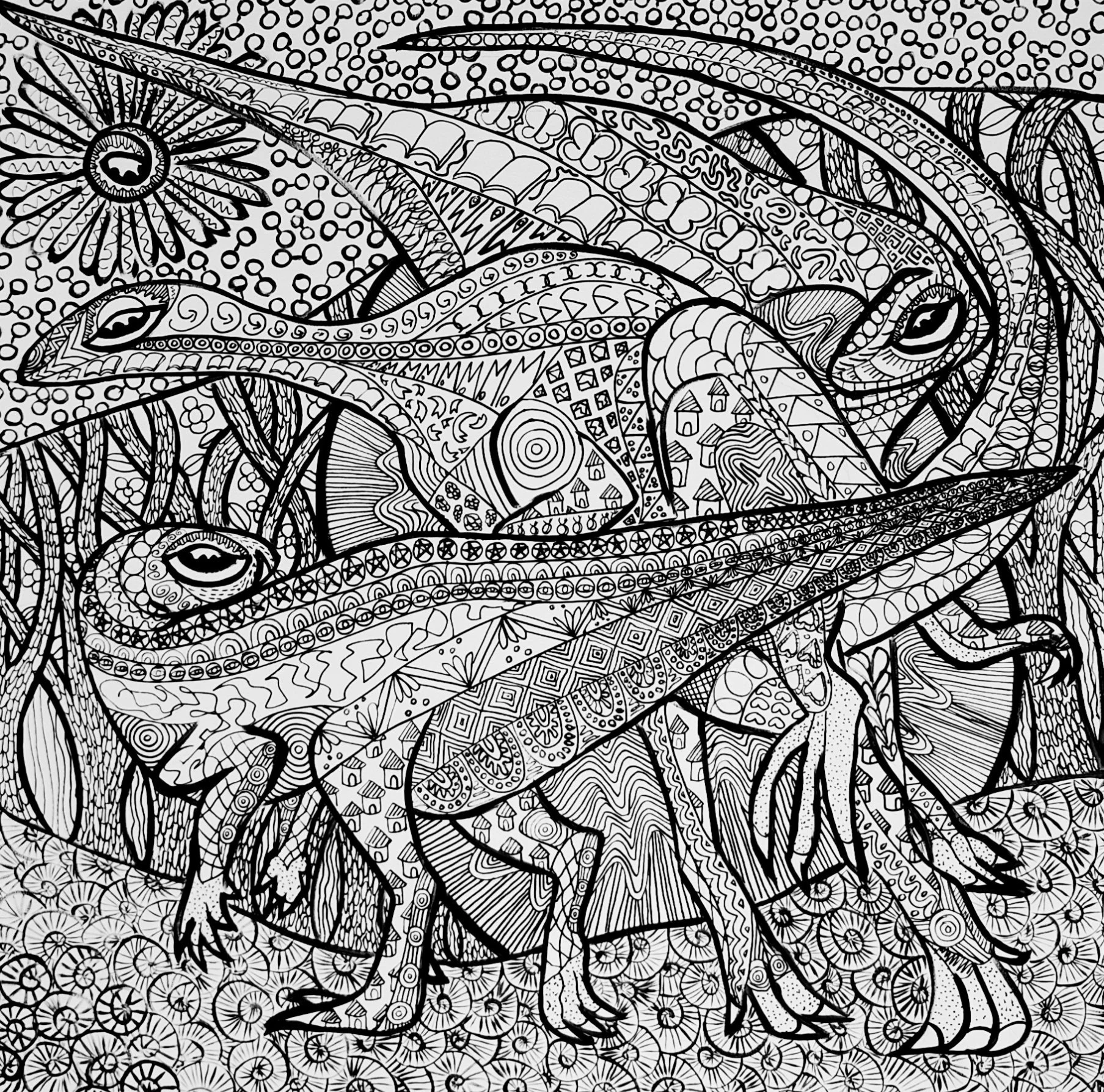
That question, combined with motherhood and my quest into my history, led me straight into deep time, and to the forgotten giants of African prehistory.
Ask almost anyone to picture a dinosaur, and the same handful of North American and European icons immediately appear in their mind. Yet the African continent was home to some of the most extraordinary prehistoric creatures ever to walk the Earth—from the semi-aquatic Spinosaurus of North Africa to the towering Giraffatitan of Tanzania. For generations, those giants have been largely absent from popular imagination, quietly erased from the stories we tell about where awe, antiquity, and foundational power belong.
When we reclaim what has been erased from deep time, something subtle but irreversible happens in the viewer. You realize that what you thought was the whole picture was only a fragment. You begin to question what else you have accepted without looking closer—about origin, about scale, and about what you carry inside yourself before you even take your first steps.
This is the heart of my lead work today. Whether I am working on a monumental canvas or an intimate tondo, my goal is not mass applause. It is resonance. I am creating portals for those who feel that same pull—to pause, look beneath the surface, and step into a fuller way of being. While I continue to work polymathically across disciplines in private, my primary artistic devotion lives here.
The giants were always there beneath our feet. Now, we learn to see them again. Embody them.
Forward moving momentum.
