When I began retelling Tales by Moonlight stories to my children in the diaspora—starting with the familiar dusk call "Story, story, story. Once upon a time, time, time..."—I was simultaneously putting The AMOH Hypothesis into words and searching for the visual container strong enough to hold deep African prehistory.
The turning point arrived when my patron - the Nigerian collector Andrew Ine urged me to study Prince Twins Seven-Seven, the iconic master of the Osogbo art movement.
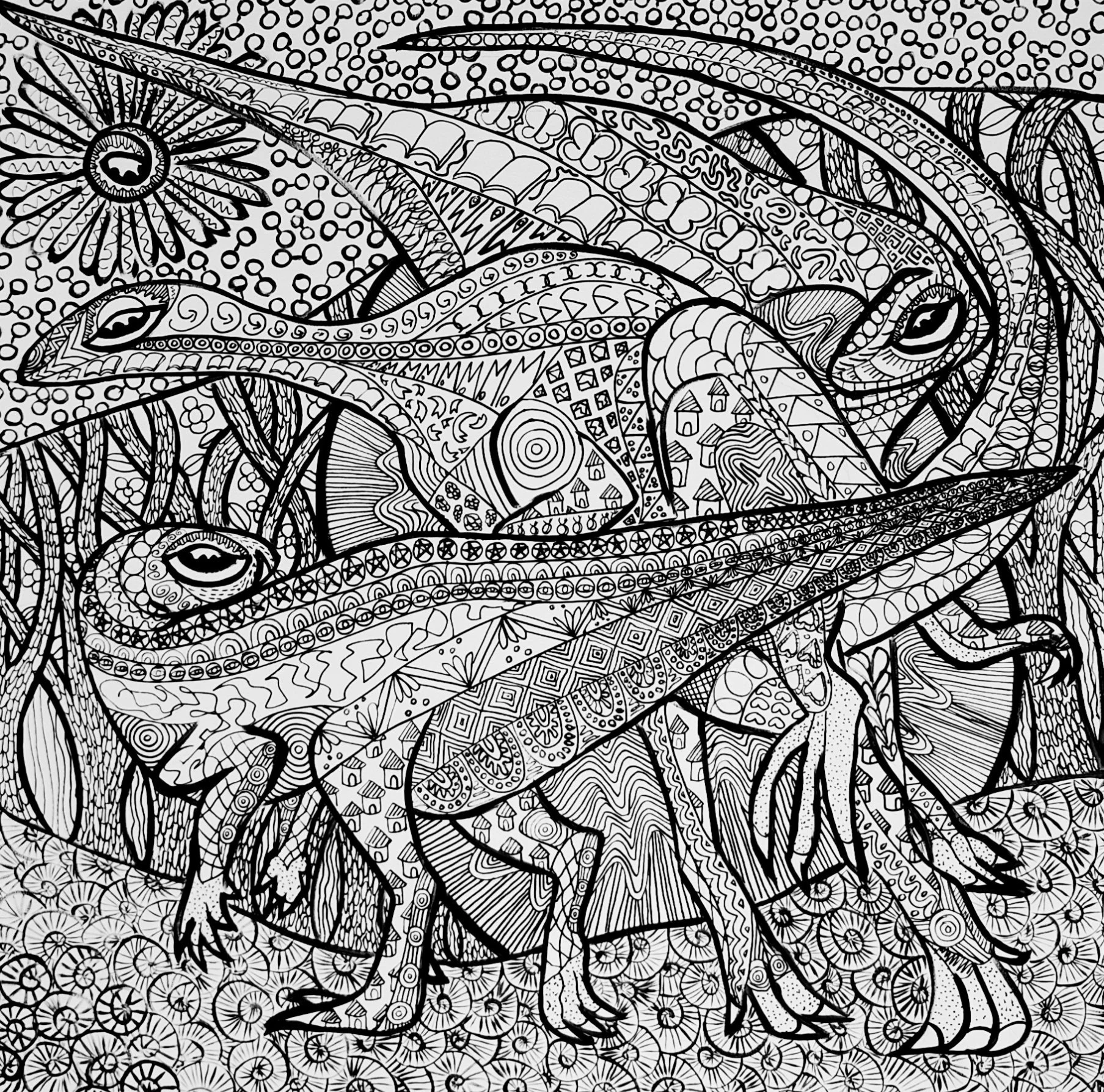
Studying Twins Seven-Seven’s work was like finding a missing genetic sequence. In Osogbo cosmology, line and pattern are never surface ornament—they are living spiritual architecture, dense with metamorphosis, myth, and ancestral presence. Paired with my quiet studies of how global art ecosystems function at the highest institutional levels, that encounter crystallized everything.
To reclaim Africa’s forgotten prehistoric giants—scaling monumental canvases larger than the largest African dinosaurs while reserving works under 100 centimetres for eggs and anatomical artifacts—Western realism was never enough. Only a visual language rooted in ancestral geometry, biosemiotics, and Yoruba storytelling cadence could carry the living pulse of deep time.
