The deep time of the African continent is rarely afforded its own mythology in the global contemporary imagination. While Eurocentric narratives historically led the field of paleontology, the soil of all continents tells an un-compromised, shared story of life, mutation, and survival. My work takes a Pangaean approach—rooted in Africa, but recognizing a time before continents fractured into distinct borders.
Born of my experience becoming a mother of a multiracial family, this body of work initiates a speculative reclamation of African palaeontology. The creation of a multiracial lineage forces a confrontation with inheritance, identity, and the fluid blending of worlds; it mirrors the ancient Pangaean reality where all lineages emerged from a single, unbroken soil. By rendering the continent's prehistoric giants to their exact, life-sized physical scales, the canvas ceases to be a decorative object and becomes a monumental site of confrontation. These are not merely representations of extinct fauna and flora; they are structural monuments to the deep-time archive of African geography and the expansive definition of family.
The Cinematic Orality of Tales by Moonlight
The narrative architecture of this series is directly informed by the legendary television program Tales by Moonlight. Growing up, the ritual call-and-response (“Story, Story / Story. Once upon a time / Time, Time”) transported an entire generation into a village setting under the evening sky, where the boundaries between the human, ancestral, and animal kingdoms were fluid.
By adopting this exact logic, each dinosaur painting in this series operates as a frozen episode of an ancient, unrecorded folklore. Just as Tales by Moonlight used anthropomorphic animals to mirror human complexities and cultural values, these prehistoric leviathans are cast as characters within an original, mythological ecosystem. The artist acts as the contemporary "Aunty" or "Grandpa" figure, gathering the audience around massive canvases to pass down new moral mythologies regarding survival, ecological dominance, and legacy.
The Graphic Ecology of the Oshogbo Line
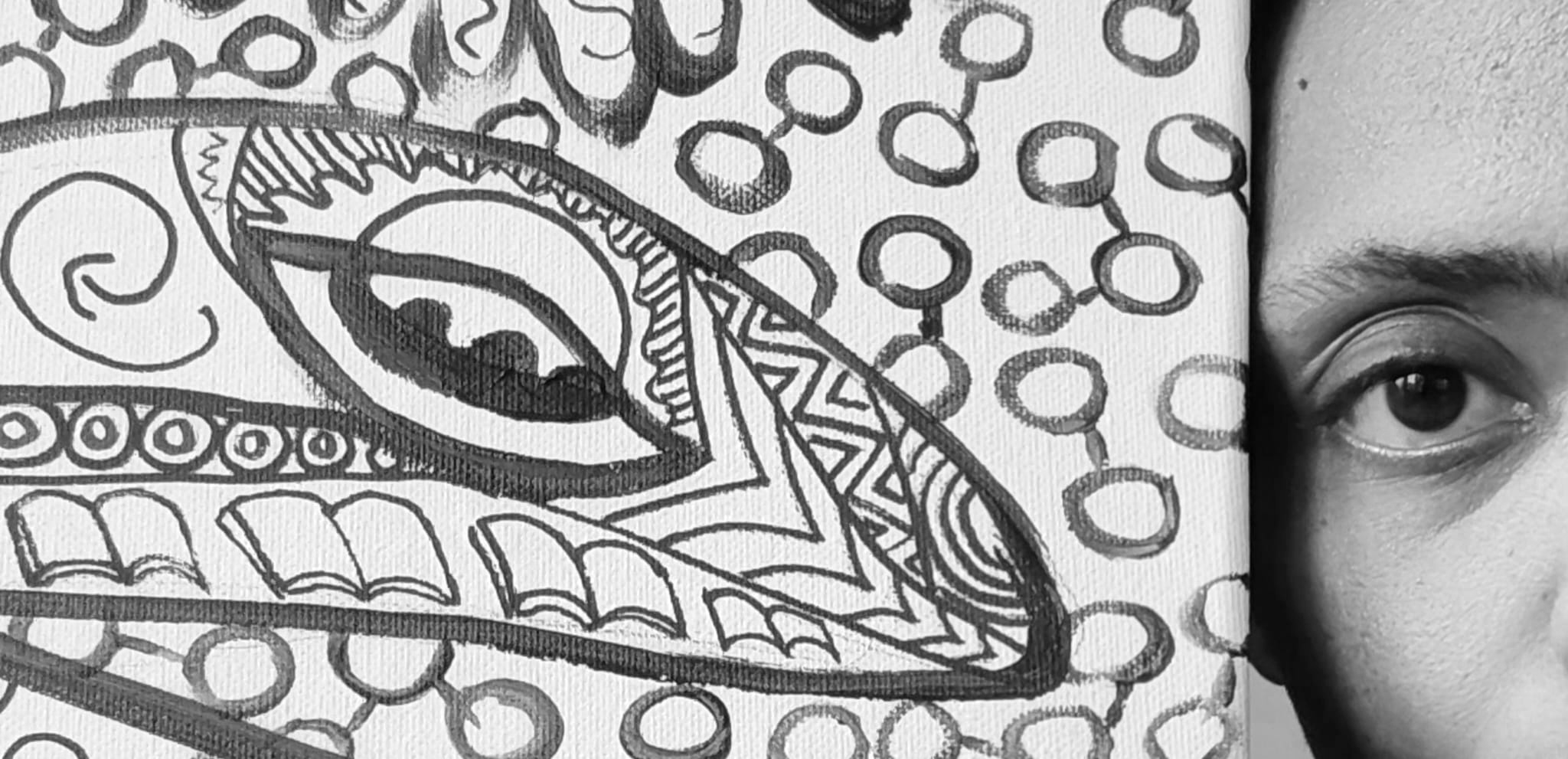
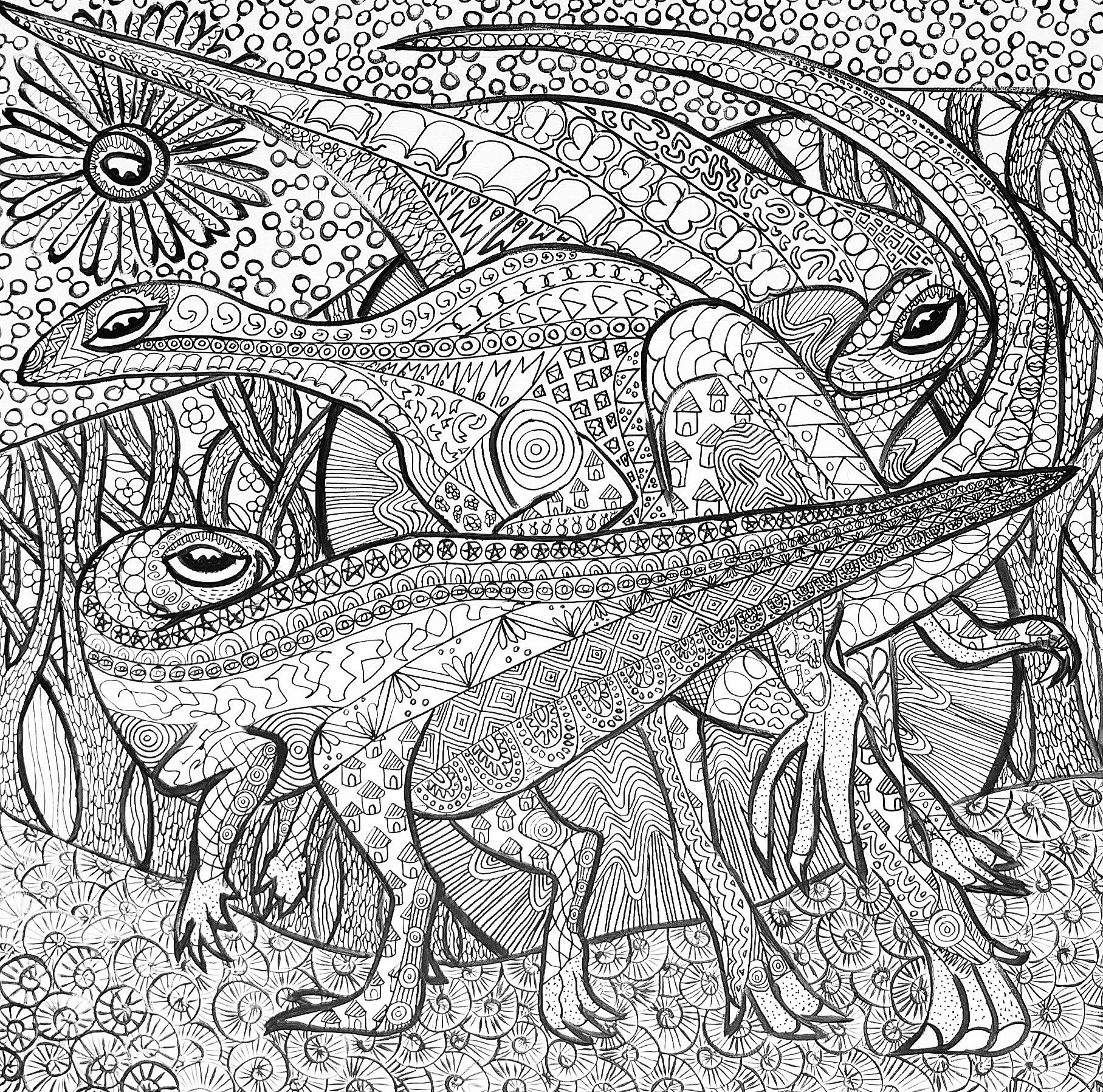
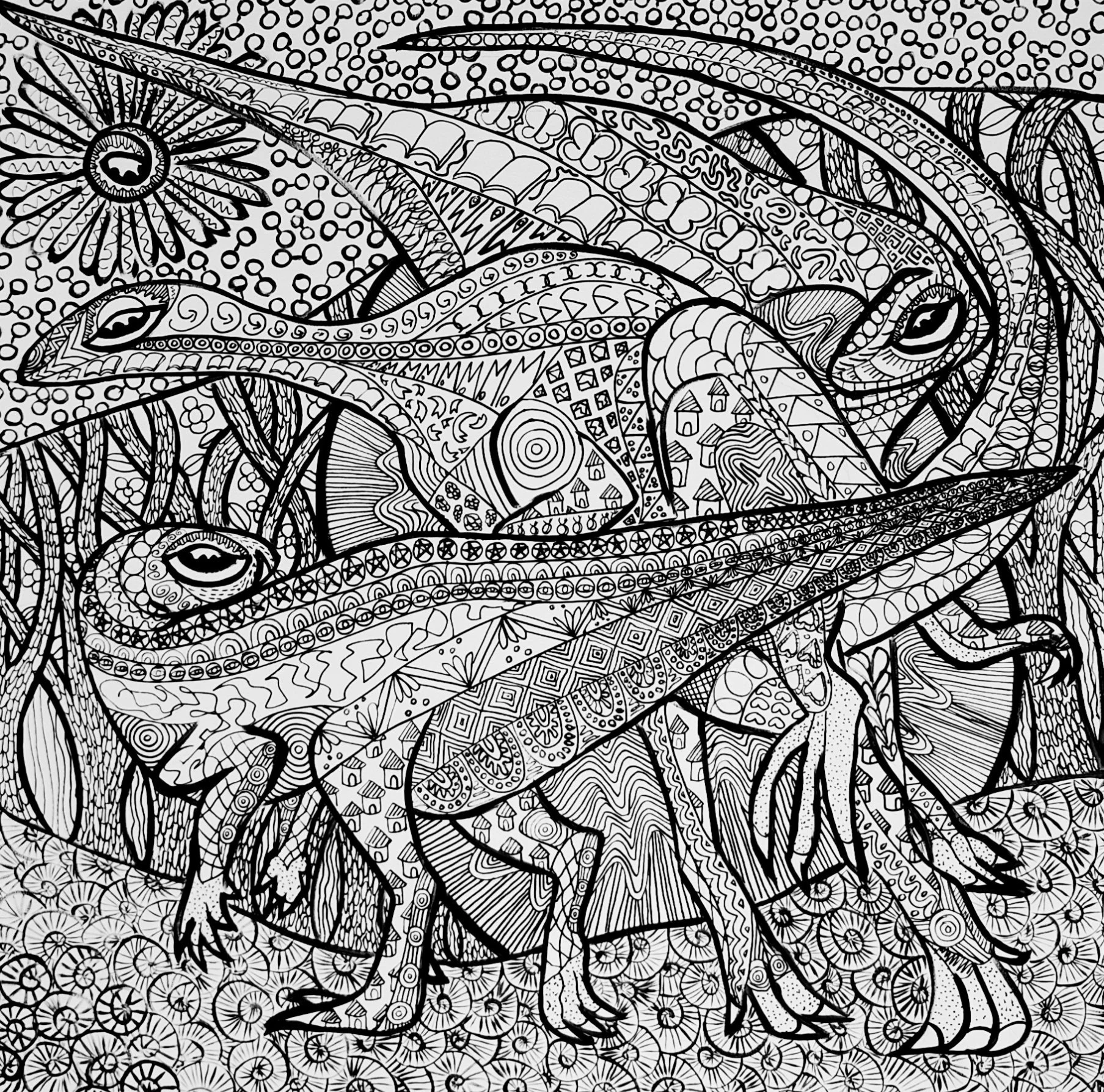
Visually, this project functions as a direct evolution of the traditions popularized by the Oshogbo Art Movement, specifically channelling the dense, kinetic graphic language of Twins Seven-Seven.
By discarding colour in favour of a strict, unyielding black-and-white palette, the works reject the easy traps of tropical exoticism or commercial decoration. The viewer is forced to confront the pure architecture of line, form, and texture. The intricate, vibrating patterns that coat the hides, plates, and environments of these creatures do not merely fill space—they represent a living tapestry of folklore, cosmology, and cell structures. It is a visual language where the prehistoric meets the hyper-modern.
Post-Contemporary Myth-Making
To paint a creature like an African dinosaur is to engage in an act of world-building that disrupts the gaze thus far. This series repairs rupture to date, by stitching ancient biological heritage to frontier post-contemporary visionary effort. Each footprint and egg study serves as a conceptual archive.
This series positions the artist not as a mere illustrator of the past, but as a host-curator of a vast, sovereign ecosystem—bridging the gap between the soil beneath our feet and the stories that define our future.
“Applying correct effort, so
your future generations
don’t get left behind.”
- Dr Abiose M O Haara MD
Resurrecting Our Ancestors
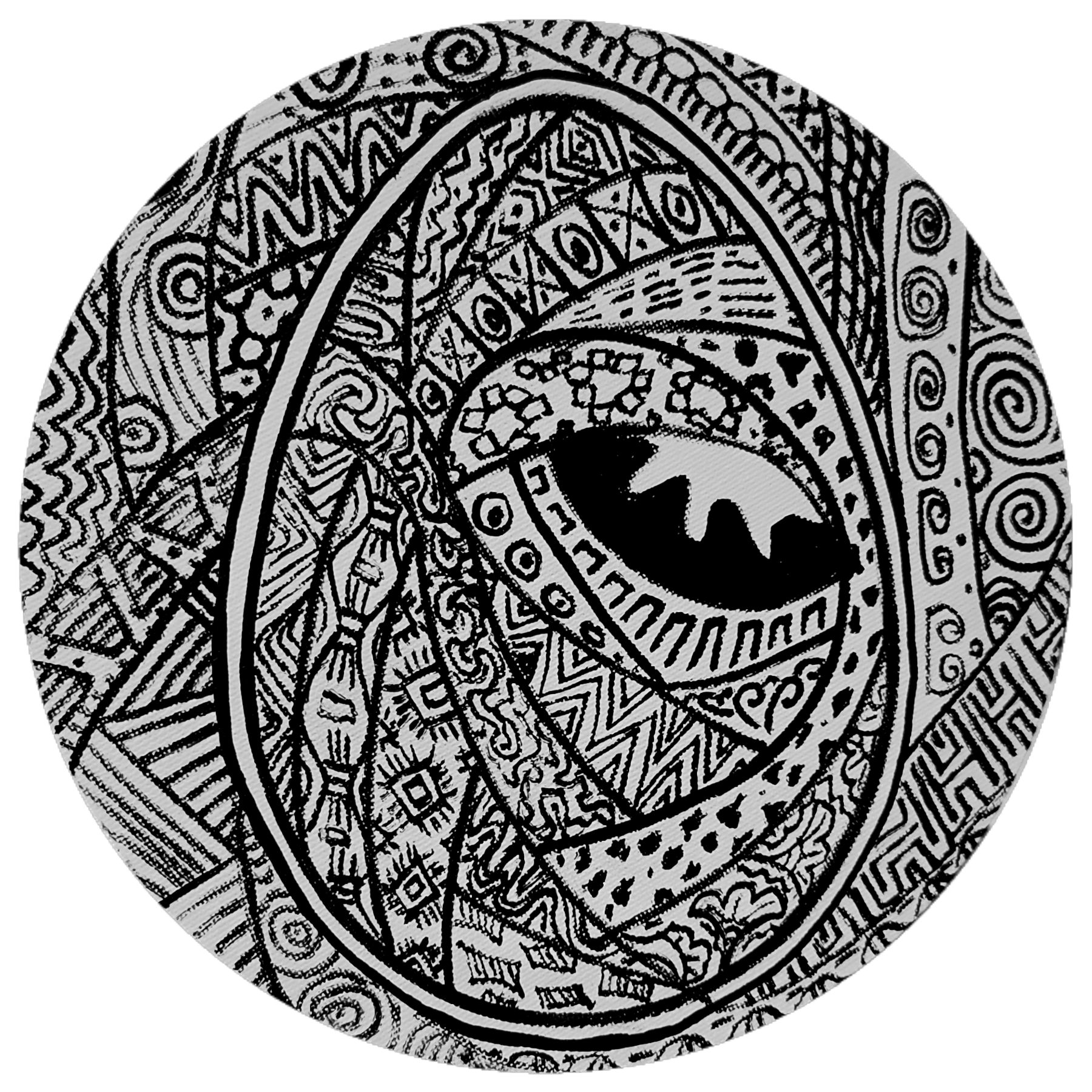
-
“Story, story, story. Once upon a time, time, time...
Long ago, in prehistoric Africa, beneath the roots of ancient trees and surrounded by the whispers of a world much older than itself, an African dinosaur rested inside an egg.
It had never seen the sun, never felt the earth beneath its feet, and never heard the songs of the creatures outside. Yet, somehow, the world was not entirely unfamiliar.
Deep inside it lived something mysterious: the echoes of its ancestors.
It carried the strength of those who had crossed endless plains, the patience of those who had survived great droughts, and the courage of those who had faced storms, predators and changing landscapes. It carried no memories in the way we understand them, but something had passed through generations — instincts, strengths and the remarkable ability to adapt.
Outside, the planet was changing. Rivers were carving new paths. Forests were spreading. The earth was preparing for another chapter in its long history.
And this little African dinosaur would have a part to play.
Perhaps it would shape the landscape as it moved through the vegetation. Perhaps it would scatter seeds, nourish the soil, become part of the great circle of life, or help maintain the delicate balance of its ecosystem.
It did not yet know what its purpose would be. It only knew that it was coming.
Inside its patterned shell, it waited — carrying an ancient inheritance and an entirely new future.
The world had existed long before it. But the world would be different because it had arrived.
The moral of the story is that every new life inherits something from the past, but has the power to leave its own mark on the future.”
-
Acrylic on canvas
20cm tondo
-
2026
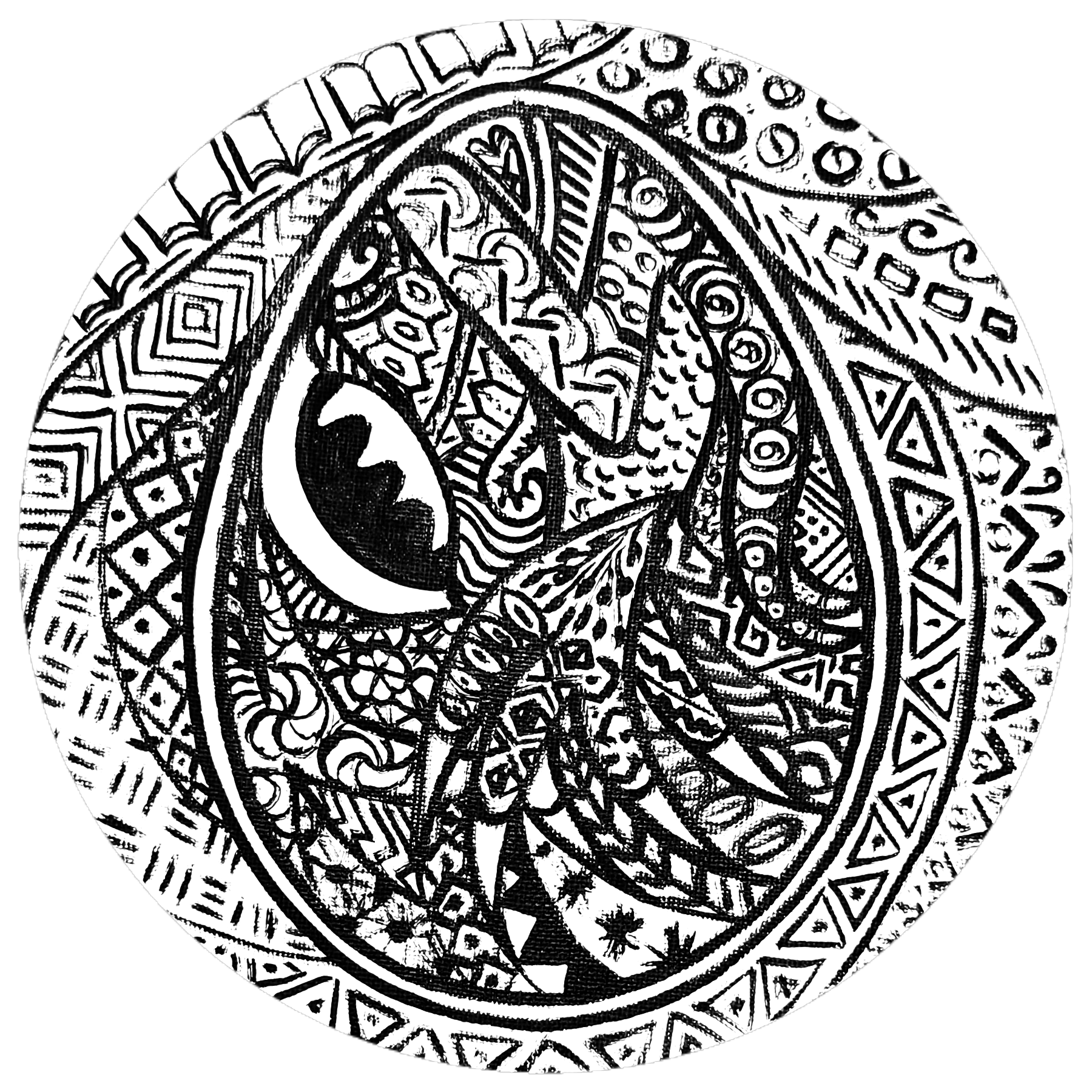
-
“Story, story, story. Once upon a time, time, time...
Long ago, in prehistoric Africa, an African dinosaur lay quietly inside its egg, hidden beneath a canopy of ancient leaves.
Outside, the wind travelled across the land, carrying stories from distant mountains and great rivers. The little dinosaur could not see any of it, but it felt the gentle vibrations of the earth beneath its nest.
Its ancestors had lived through a world of enormous changes. They had witnessed rivers drying and returning, forests growing and disappearing, and new creatures arriving in places where others had once wandered. Their lives had become part of the history of the land.
Now, inside this tiny shell, a new generation was waiting.
The little dinosaur would inherit a world shaped by everything that had come before. Its footsteps might press new paths into the earth. Its feeding might change the plants around it. Its presence might provide food for another creature one day. Even without knowing it, it would become part of a much greater story.
As the afternoon sun warmed the nest, the egg glowed softly beneath the leaves.
The little dinosaur shifted, listening to the heartbeat of the ancient world.
It was not yet time to emerge. There was still so much to inherit, so much to discover, and so much to become.
And somewhere beyond the shell, the future was waiting.
The moral of the story is that we are all part of something much older than ourselves, and every generation has a role in shaping what comes next.”
-
Acrylic on canvas
20cm tondo
-
2026
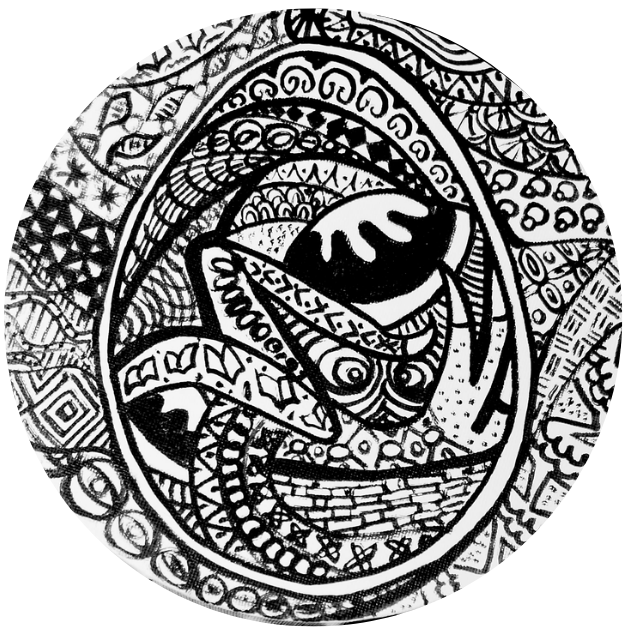
-
“Story, story, story. Once upon a time, time, time...
Long ago, in prehistoric Africa, an African dinosaur rested inside its egg, deep within a quiet valley where ancient rivers met.
The little dinosaur had no idea that the land outside was alive with movement. Great herds travelled across the plains, enormous trees stretched towards the sky, and strange plants flourished along the riverbanks.
But the world was never still.
Over countless generations, its ancestors had learned to live with change. When the waters disappeared, they had found new places to survive. When the forests became thinner, they had adapted to different surroundings. When danger came, they had learned when to stand their ground and when to move on.
All of that history had led to this moment.
Inside the egg, a new African dinosaur was developing. It would enter a world that needed every creature, large or small. By walking, feeding, growing and eventually becoming part of the food chain, it would help shape the environment around it.
Perhaps its greatest contribution would never be remembered. Perhaps no creature would know what difference it had made.
But the earth would feel its presence.
And so, beneath the warm African soil, the little dinosaur waited patiently, carrying the legacy of generations before it.
The moral of the story is that greatness is not always measured by how much of the world we change, but by the part we play in keeping life moving forward.”
-
Acrylic on canvas
20cm tondo
-
2026
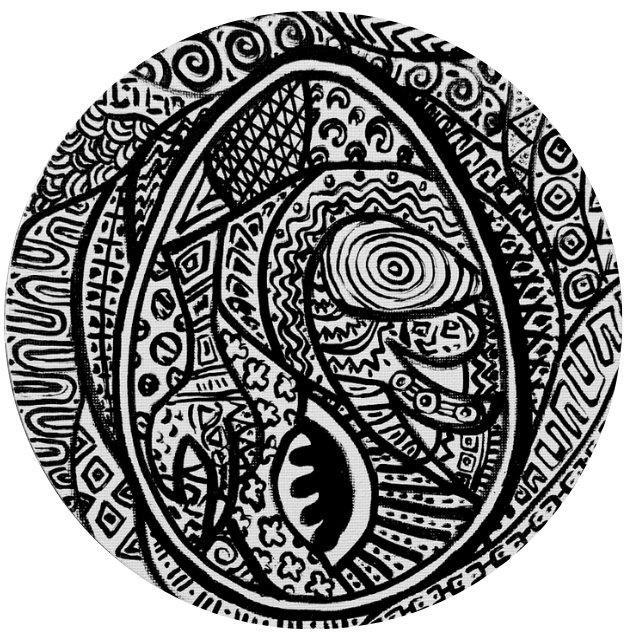
-
“Story, story, story. Once upon a time, time, time...
Long ago, in prehistoric Africa, an African dinosaur rested inside its egg, tucked away beneath the roots of an ancient tree.
Outside, the world was full of secrets. The rivers carried minerals from distant mountains, the wind scattered seeds across the plains, and the great forests breathed with life. Every creature, every plant and every drop of water was connected in ways no one could fully understand.
Inside the egg, a new life was taking shape.
Its ancestors had travelled through changing landscapes for millions of years. They had witnessed the rise of new plants, the arrival of unfamiliar creatures and the disappearance of worlds they once knew. Their greatest inheritance was not land or possessions, but the ability to endure and adapt.
This little dinosaur would carry that inheritance into a new generation.
One day, it would step into the sunlight and become part of the ancient African landscape. It might wander through the vegetation, leave footprints in the mud, disturb the earth and create opportunities for other forms of life. Its existence would become another thread in the enormous tapestry of nature.
For now, though, it remained surrounded by the darkness and warmth of its shell, unaware of how far its story might reach.
The earth was waiting for another small beginning.
The moral of the story is that even before we take our first steps, we carry the history of those who came before us and the possibility of changing the world ahead.”
-
Acrylic on canvas
20cm tondo
-
2026