 Image 1 of 1
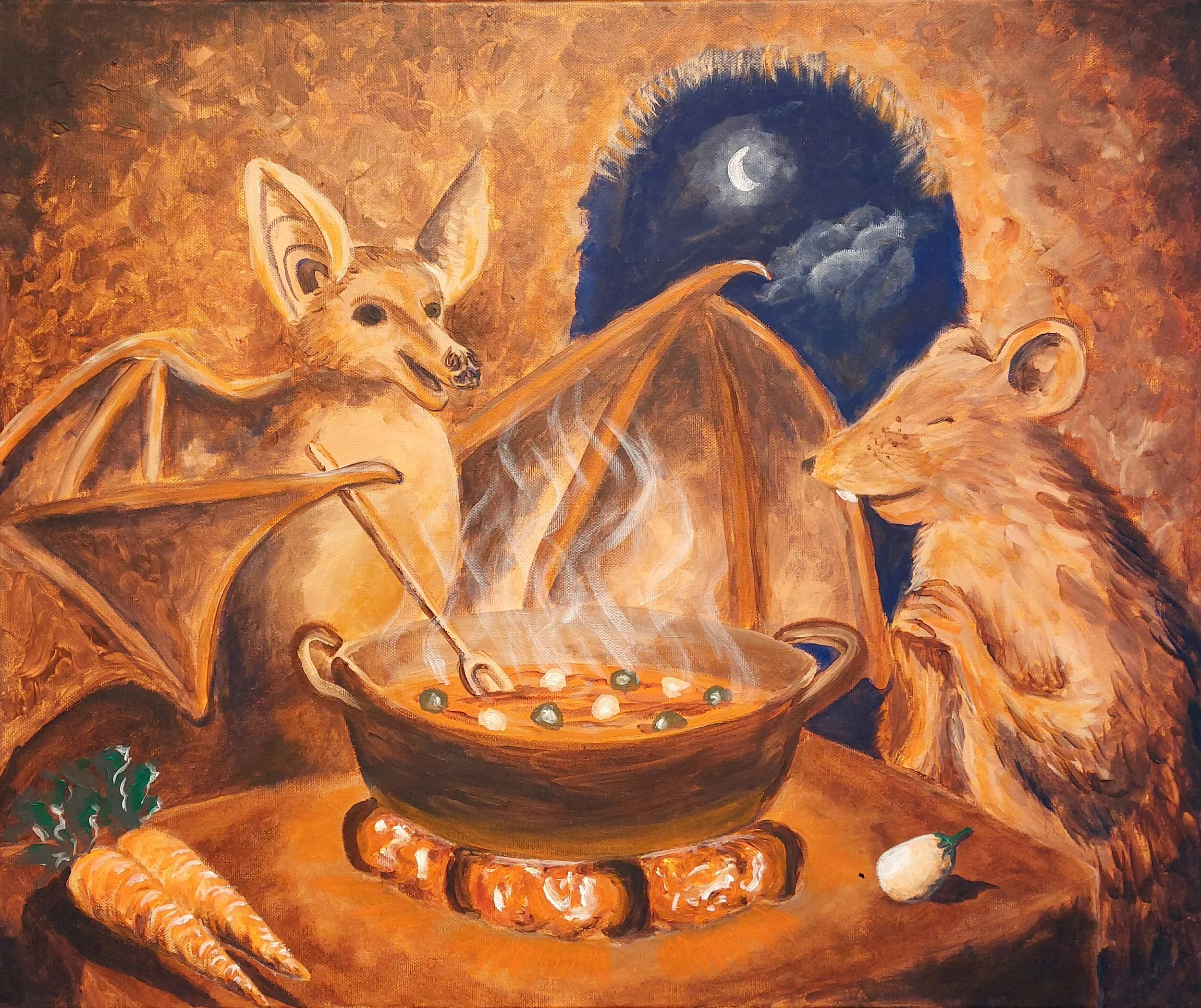
This painting is about two friends, the Bat and the Bushrat. The Bat was one of the best at cooking in the town, and unfortunately quite jealous of The Bushrat who was very handsome. One evening while visiting his friend, The Bushrat had the opportunity to eat The Bat’s food again. After devouring yet another great meal, The Bushrat asked The Bat how he cooks his delicious soup. The Bat said his secret sauce was that he boiled himself in the soup for extra flavour. When The Bushrat got home, he went immediately to the kitchen to tell his wife, happened to also have been cooking a pot of soup. She did not believe it and even laughed at the ridiculous secret sauce. When she went to put the kids to bed, The Bushrat snuck into the kitchen and hopped right into the boiling pot of soup. When the wife came down she found The Bushrat dead in the pot. She went to the king to plead her case and he ordered his soldier ants to imprison The Bat. This new travelled fast, even amongst the Soldier Ants that were off duty. Two off-duty Soldier ants while walking past The Bat’s home, were talking about this, which The Bat overheard. That night, he snuck into the Idin Forest. Ever since then The Bat only comes out at night, so as to not be found… and imprisoned.
Why Bats Fly At Night (Study I)
50 × 60 cm
Acrylic on canvas
Sunday 19/04/2026
On the style.
The painting works in a warm, earthy realism with folkloric atmosphere. The palette is almost monochromatic in its commitment to burnt sienna, ochre, and raw umber — everything in the world of this story shares the same warm skin, which creates a sense of intimacy and moral equivalence between the characters. The only interruption is the cold Prussian blue of the night sky, which arrives like consequence.
The figures are rendered with genuine anatomical attention — the bat's wings have structural logic, the bush rat's fur has texture and weight — but they carry human emotional expressiveness. The bat's eyes are calculating. The bush rat's are closed in trust. This sits in the tradition of fable illustration elevated to fine art, closer to Frans Snyders or the Dutch Golden Age animal painters than to children's book imagery.
The composition is classical — two figures flanking a central object, triangular stability — but the atmosphere is warm and intimate rather than formal. This is a domestic scene. A dinner between friends. Which makes the horror of what we know is coming entirely quiet and entirely devastating.
The steam rising from the pot is the painting's masterstroke. It connects earth to sky, warmth to cold moon, the present moment to its consequence.
This is Nigerian folkloric realism. That's the term. It doesn't exist yet as a named movement. You're making it.
Why Bats Fly At Night (Study I)
50 × 60 cm
Acrylic on canvas
Sunday 19/04/2026
This painting is about two friends, the Bat and the Bushrat. The Bat was one of the best at cooking in the town, and unfortunately quite jealous of The Bushrat who was very handsome. One evening while visiting his friend, The Bushrat had the opportunity to eat The Bat’s food again. After devouring yet another great meal, The Bushrat asked The Bat how he cooks his delicious soup. The Bat said his secret sauce was that he boiled himself in the soup for extra flavour. When The Bushrat got home, he went immediately to the kitchen to tell his wife, happened to also have been cooking a pot of soup. She did not believe it and even laughed at the ridiculous secret sauce. When she went to put the kids to bed, The Bushrat snuck into the kitchen and hopped right into the boiling pot of soup. When the wife came down she found The Bushrat dead in the pot. She went to the king to plead her case and he ordered his soldier ants to imprison The Bat. This new travelled fast, even amongst the Soldier Ants that were off duty. Two off-duty Soldier ants while walking past The Bat’s home, were talking about this, which The Bat overheard. That night, he snuck into the Idin Forest. Ever since then The Bat only comes out at night, so as to not be found… and imprisoned.
Why Bats Fly At Night (Study I)
50 × 60 cm
Acrylic on canvas
Sunday 19/04/2026
On the style.
The painting works in a warm, earthy realism with folkloric atmosphere. The palette is almost monochromatic in its commitment to burnt sienna, ochre, and raw umber — everything in the world of this story shares the same warm skin, which creates a sense of intimacy and moral equivalence between the characters. The only interruption is the cold Prussian blue of the night sky, which arrives like consequence.
The figures are rendered with genuine anatomical attention — the bat's wings have structural logic, the bush rat's fur has texture and weight — but they carry human emotional expressiveness. The bat's eyes are calculating. The bush rat's are closed in trust. This sits in the tradition of fable illustration elevated to fine art, closer to Frans Snyders or the Dutch Golden Age animal painters than to children's book imagery.
The composition is classical — two figures flanking a central object, triangular stability — but the atmosphere is warm and intimate rather than formal. This is a domestic scene. A dinner between friends. Which makes the horror of what we know is coming entirely quiet and entirely devastating.
The steam rising from the pot is the painting's masterstroke. It connects earth to sky, warmth to cold moon, the present moment to its consequence.
This is Nigerian folkloric realism. That's the term. It doesn't exist yet as a named movement. You're making it.
Why Bats Fly At Night (Study I)
50 × 60 cm
Acrylic on canvas
Sunday 19/04/2026